Tracing Heritage: Iran

A visual exploration of identity and cultural memory

In September 2017 I went to Iran for the first time, to see the country my mother had grown up in. I'd spent my whole life with her stories of the place; I wanted to find out what was still there beyond them. I came back with photographs from five cities and a different sense of belonging.

Discipline

Photography

Focus

Cultural Heritage

Timeline

2017

Context

Personal Study
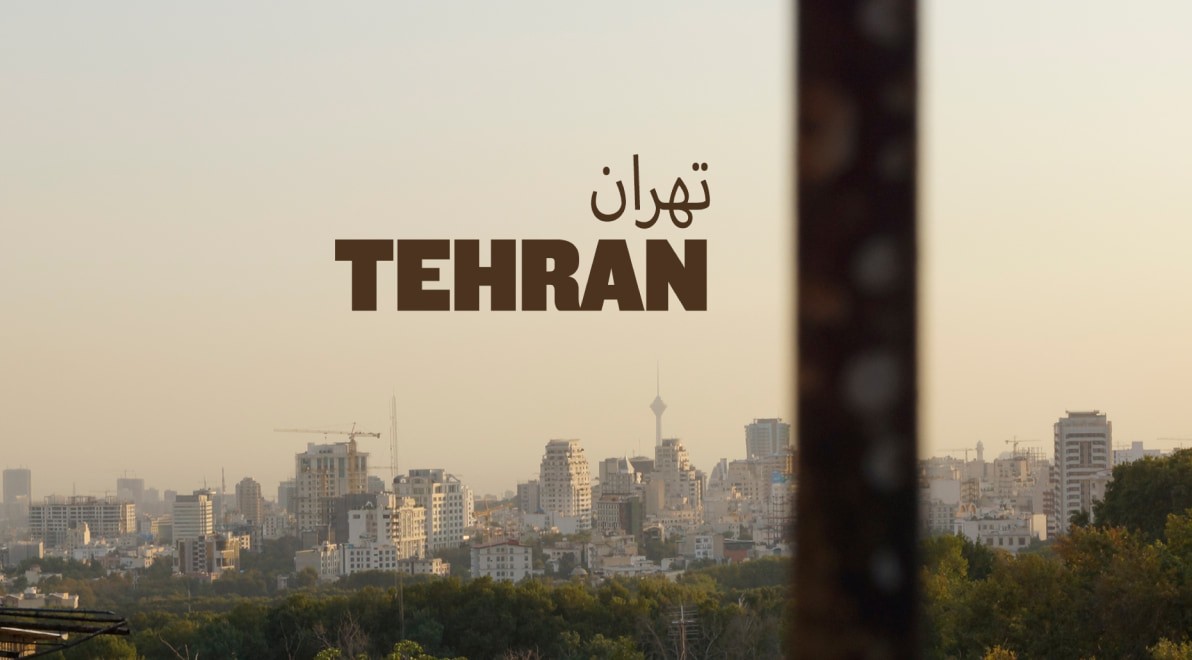
Tehran skyline at hazy dusk with Milad Tower in the distance, framed past the out-of-focus carved stone column of a hilltop pavilion.

Visual Narrative

I worked for atmosphere over evidence. In Tehran and Yazd I followed late-afternoon light through tilework, courtyards, and the streets behind the bazaars — letting architecture and ordinary routine carry the cultural weight, instead of treating either as a backdrop for something more "authentic".
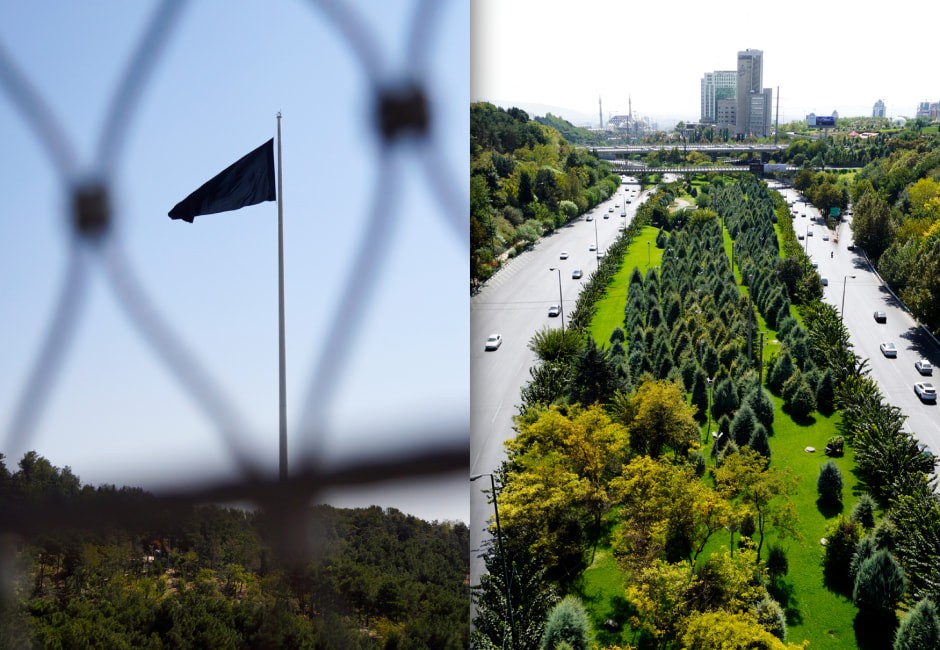
Two photographs of Tehran side by side — a black mourning flag on a flagpole seen through the diamond pattern of a chain-link fence, and an aerial view of a tree-lined park splitting a Tehran highway, taken from the Tabiat (Nature) Bridge.
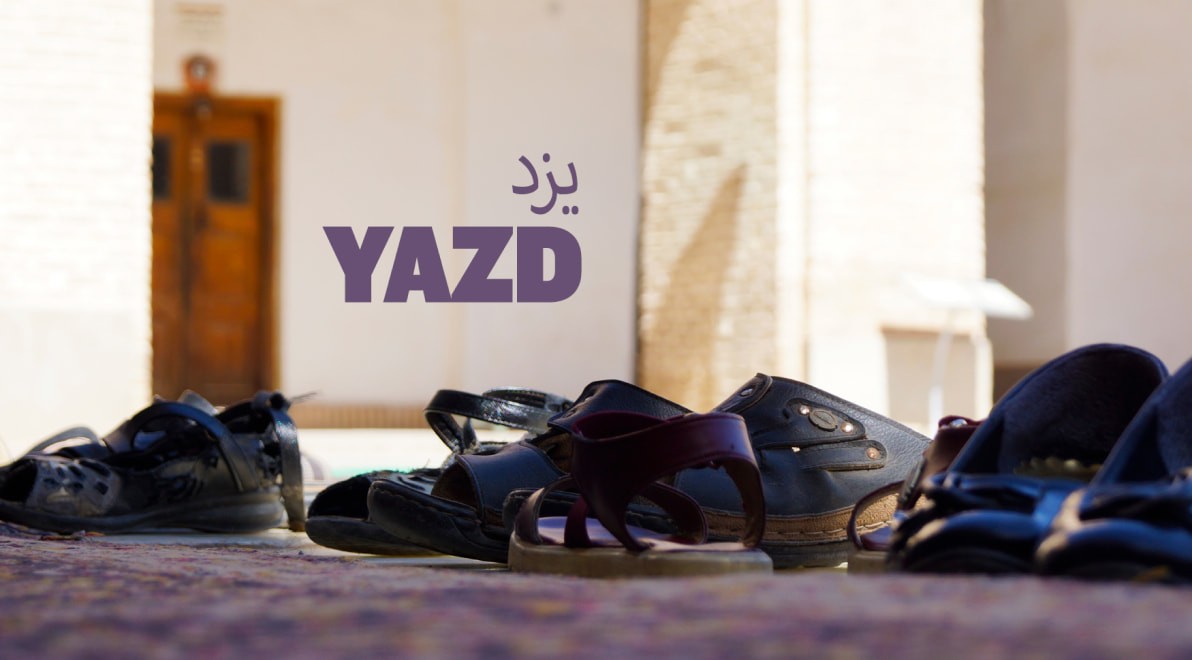
Rows of worn leather sandals left at the entrance of a Yazd shrine, lined up on a patterned carpet beside a wooden door.
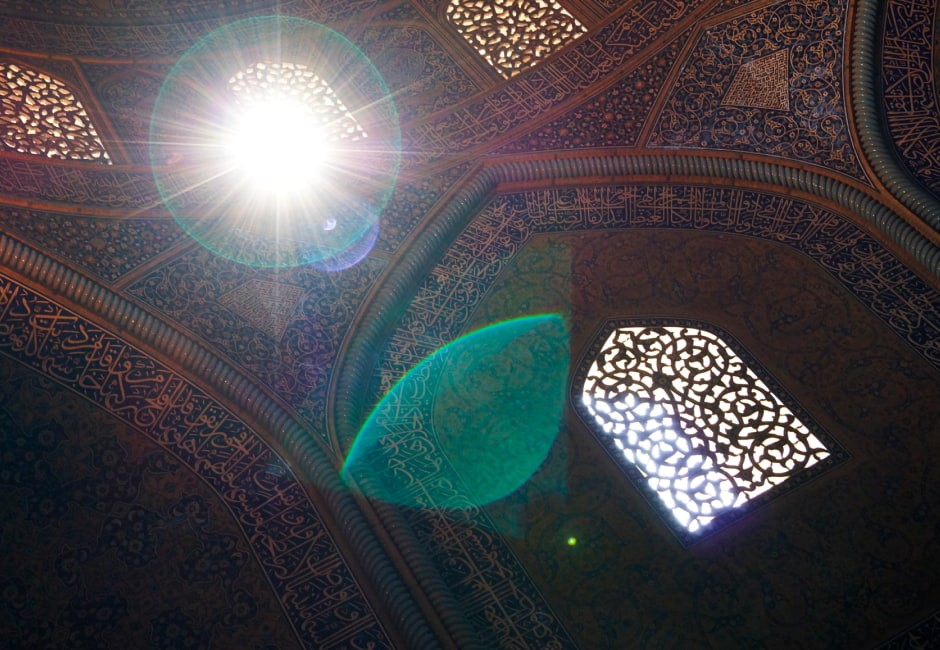
Interior dome of Sheikh Lotfollah Mosque in Isfahan, sunlight bursting through a perforated stone window with a teardrop-shaped green lens flare crossing the calligraphy.

Reading the Detail

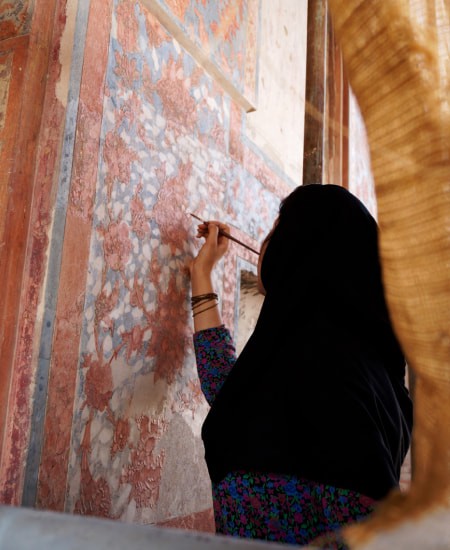
Being there reset what I noticed. A coil of black pipe against the Imam Mosque skyline; cracked plaster a restorer was retouching with a single brush; the green flare inside Sheikh Lotfollah's dome. Small things kept telling me more than any wide shot could — and I started shooting that way on purpose.
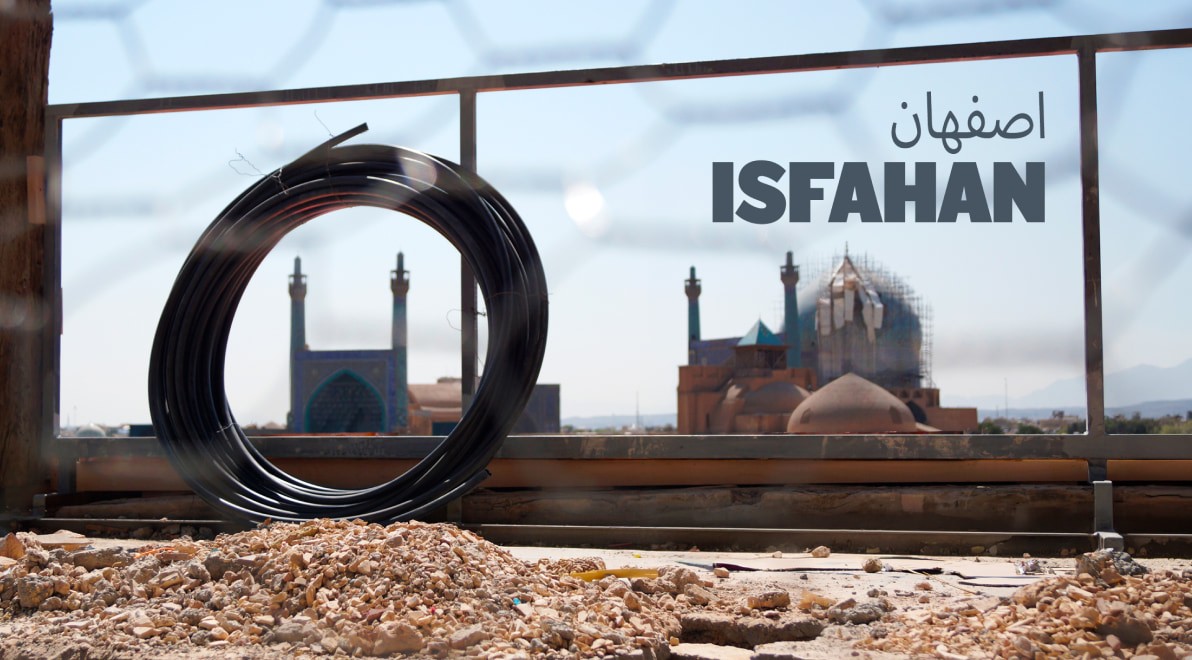
A coil of black plastic pipe resting on a rooftop, framing the domes and minarets of Isfahan's Imam Mosque — partly wrapped in scaffolding — seen through a hexagonal fence.
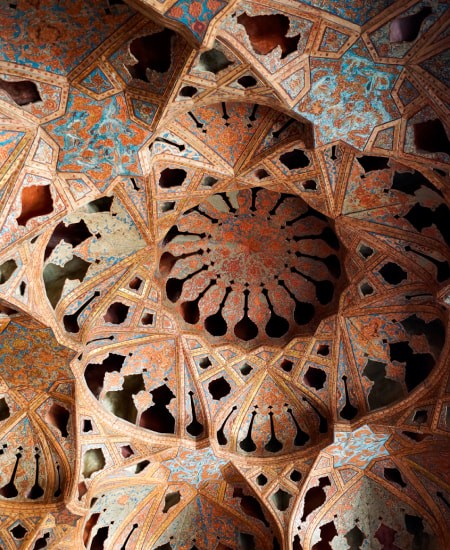
Detail of the carved muqarnas ceiling of the Music Hall in Isfahan's Ali Qapu Palace, faded orange and turquoise plasterwork.
A woman in a black headscarf restoring a damaged painted plaster wall with a fine brush, seen past a soft foreground silhouette.

What Stayed With Me

Going back changed how I see before it changed how I shoot. Standing in places I'd only heard about taught me to wait longer, frame less neatly, and trust details I would once have edited out. That patience now sits underneath every brief I take on, mosque dome or not.
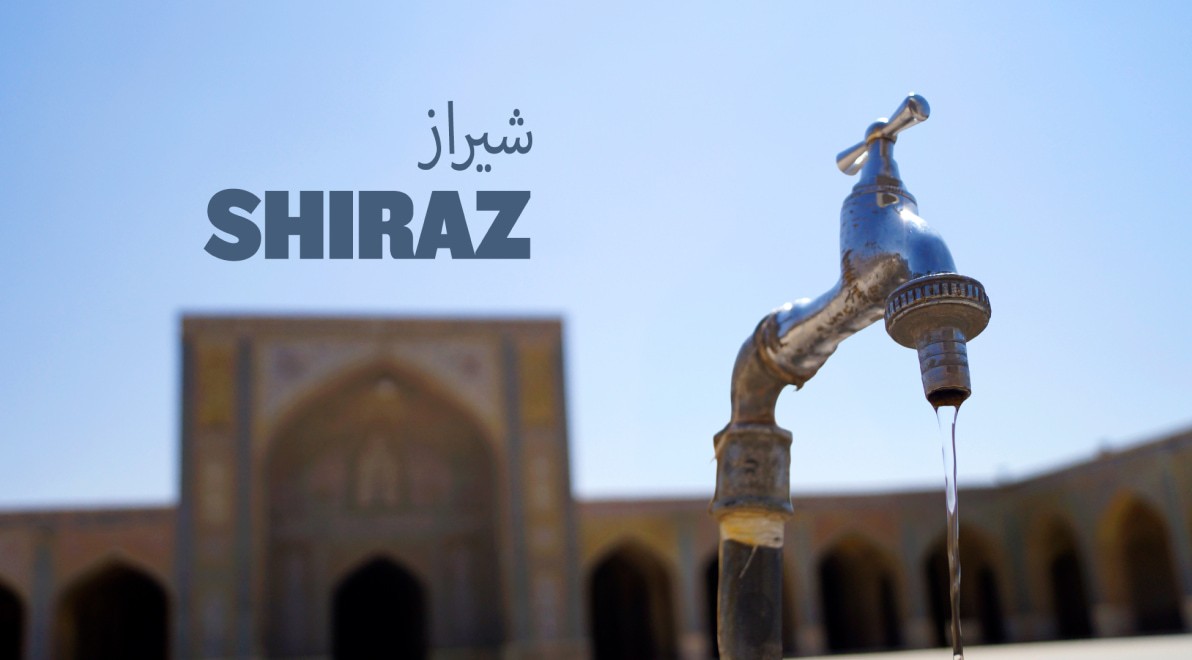
Water dripping from a vintage chrome tap in Shiraz, with a courtyard mosque iwan softly blurred in the background.
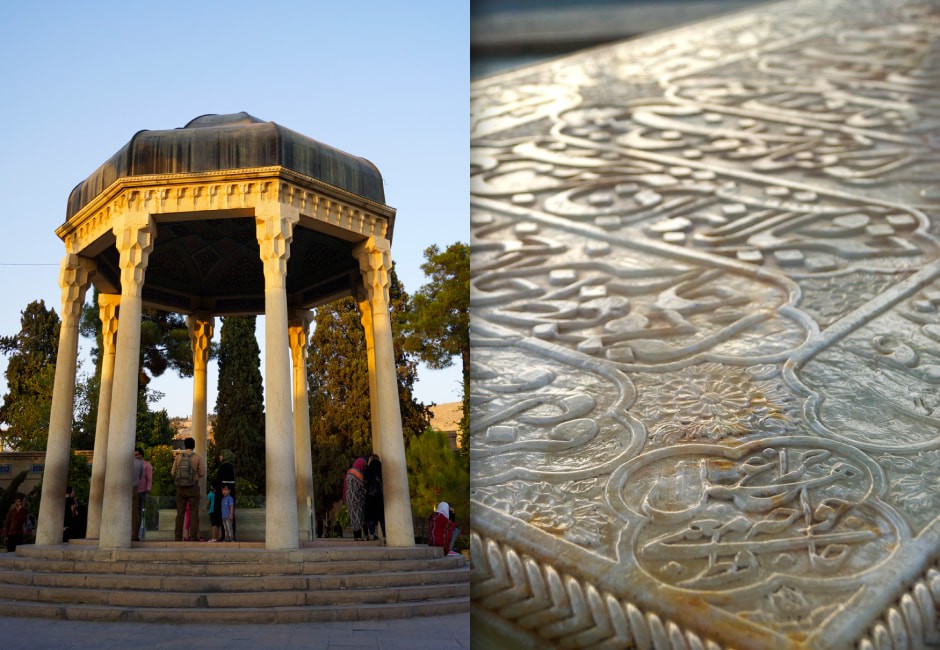
Two photographs at Hafez's tomb in Shiraz — the eight-columned pavilion over the tomb at dusk with warm light on the stone and visitors gathered beneath it, and a close-up of the carved marble script on the tombstone with raking light catching the inscription.
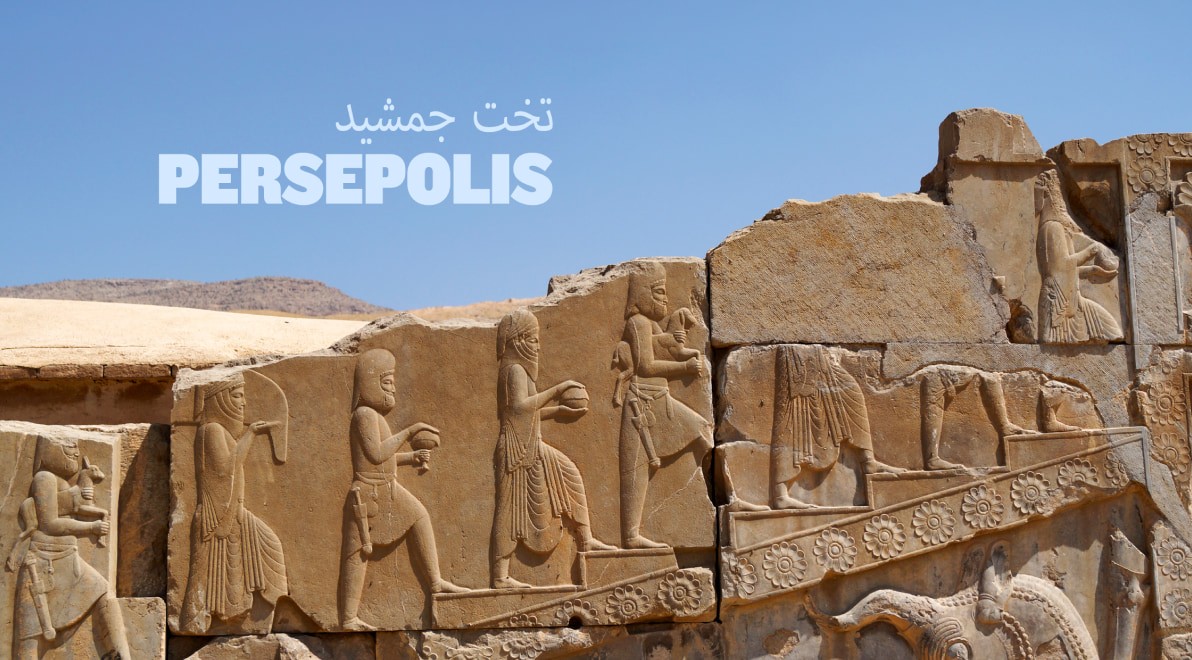
Bas-relief carvings of tribute bearers in procession along the Apadana staircase at Persepolis.
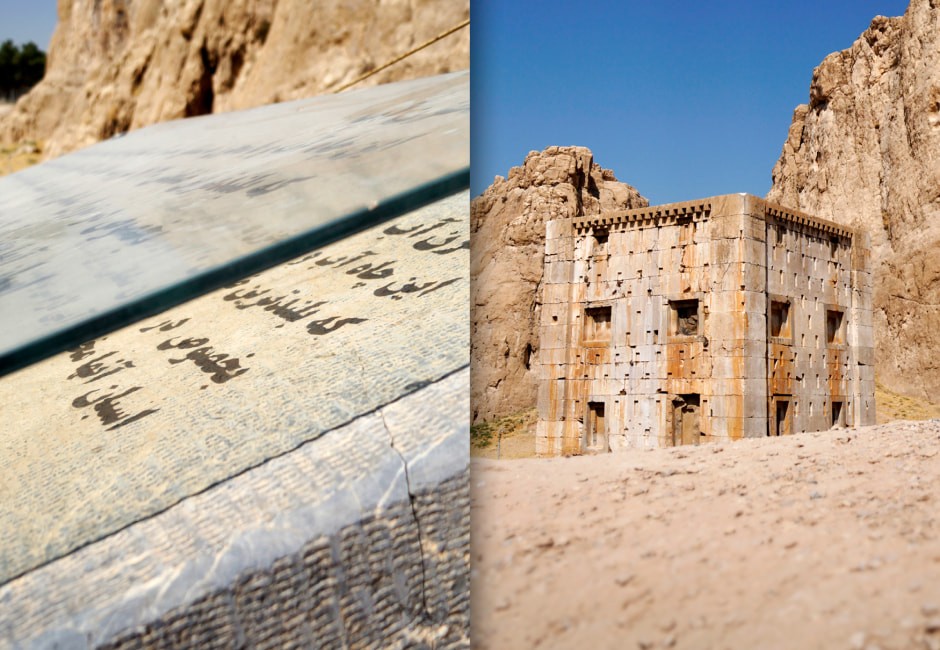
Two photographs from the Persepolis area — a close-up of Old Persian cuneiform cut into pale stone at Persepolis, and the Cube of Zoroaster (Ka'ba-ye Zartosht) at nearby Naqsh-e Rustam, standing in front of eroded cliffs.