Icon System
A unified line-icon system for GIATA
Across GIATA's products, each team had been shipping its own icons — and the interfaces showed the inconsistency. I built a unified line-icon library on a strict grid, so it would hold up across every platform, reduce the design debt we'd accumulated, and give teams a shared vocabulary to work from.
Company
GIATA GmbH
Industry
Travel Technology
Role
Art Direction & Visual Design
Year
2018

A grid of keylines
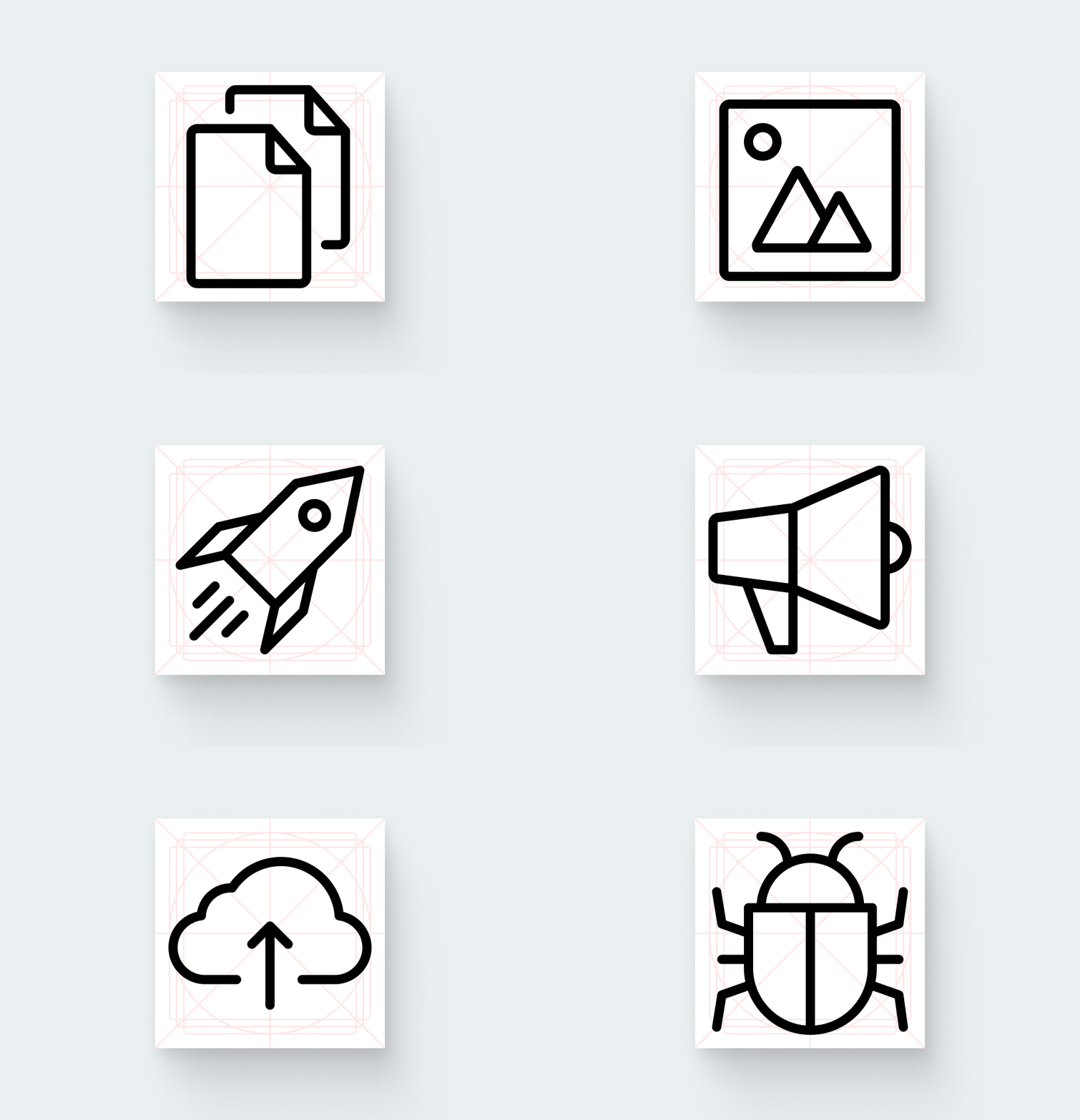
Scalability starts at the baseline. I drew every icon on the same grid, with fixed keylines for strokes, corners and terminals. The framework keeps stroke weights consistent, proportions honest, and optical balance holding up at every screen density the product suite shipped on.


Drawing and redrawing
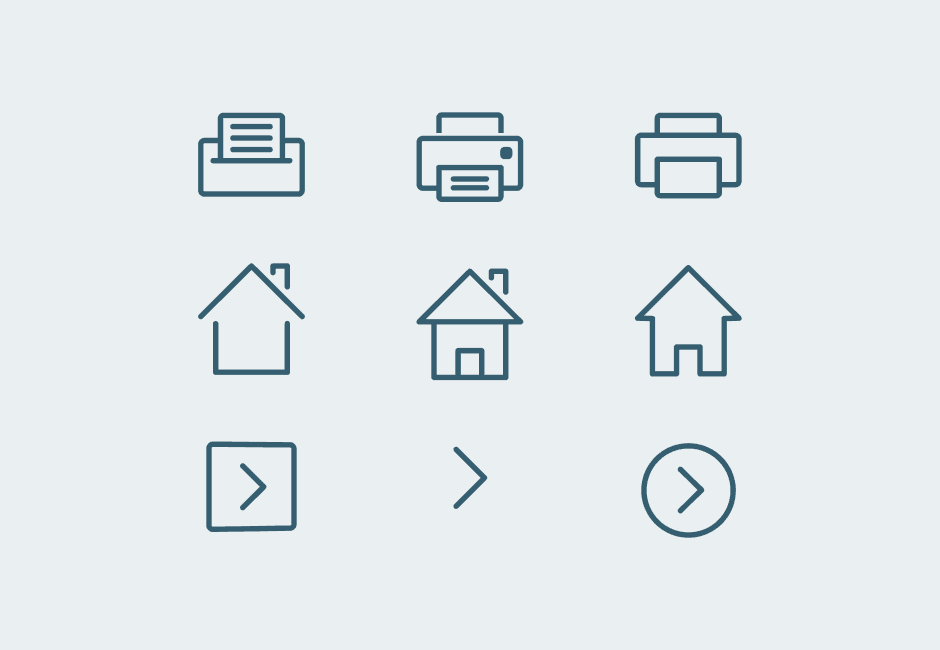
Every icon went through several rounds. I cut unnecessary anchor points, aligned corner radii to a fixed set of values, and checked each shape at 16, 24 and 32 px — the sizes the interfaces actually used. The goal was legibility at every scale, not minimalism for its own sake, but shapes that read at a glance.
"A line is a dot that went for a walk." – Paul Klee
A shared vocabulary
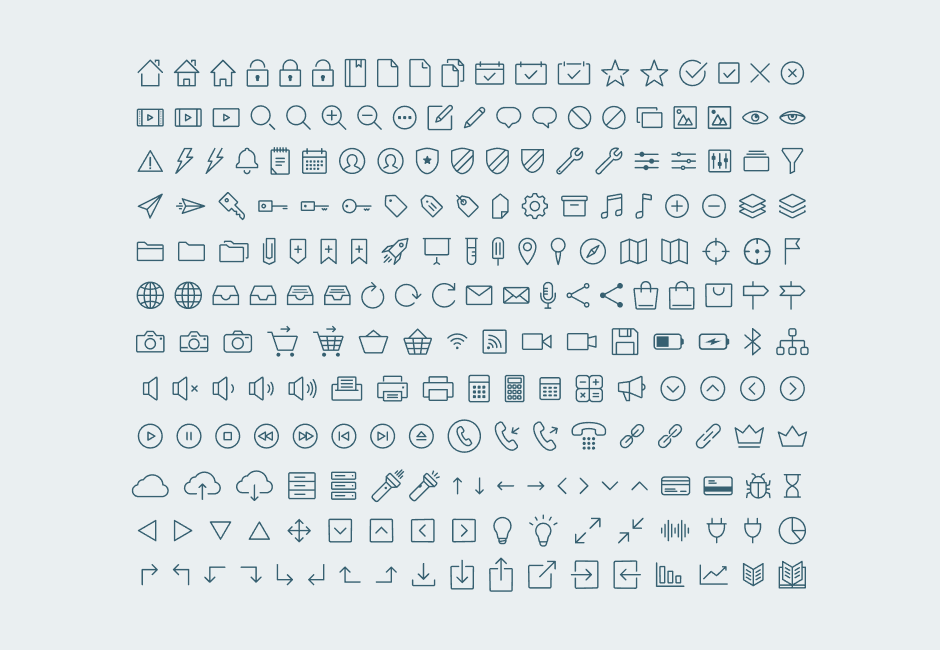
The finished library held 212 line-style icons, centralized in one source that every team could pull from. Once it shipped, the inconsistencies between products started to fade — not because teams were trying harder, but because they finally had a shared vocabulary to work from across the suite.
Where it shipped
Once shipped, the set went to work across GIATA's digital products and its internal tools. The same 212 icons sat in table cells, toolbar rails and dashboard sidebars — no parallel sets, no product-specific variations. Every interface pulled from the same file, which is what the grid was built to allow.